Curiosity has found the largest field of honeycomb fractures it has ever encountered on Mars. Similar polygons elsewhere preserve mud repeatedly soaked and dried 3.8 billion years ago—but NASA says this new “sea of polygons” could also have been created by temperature swings, compression or mineral changes.
spacedaily.comdev-news
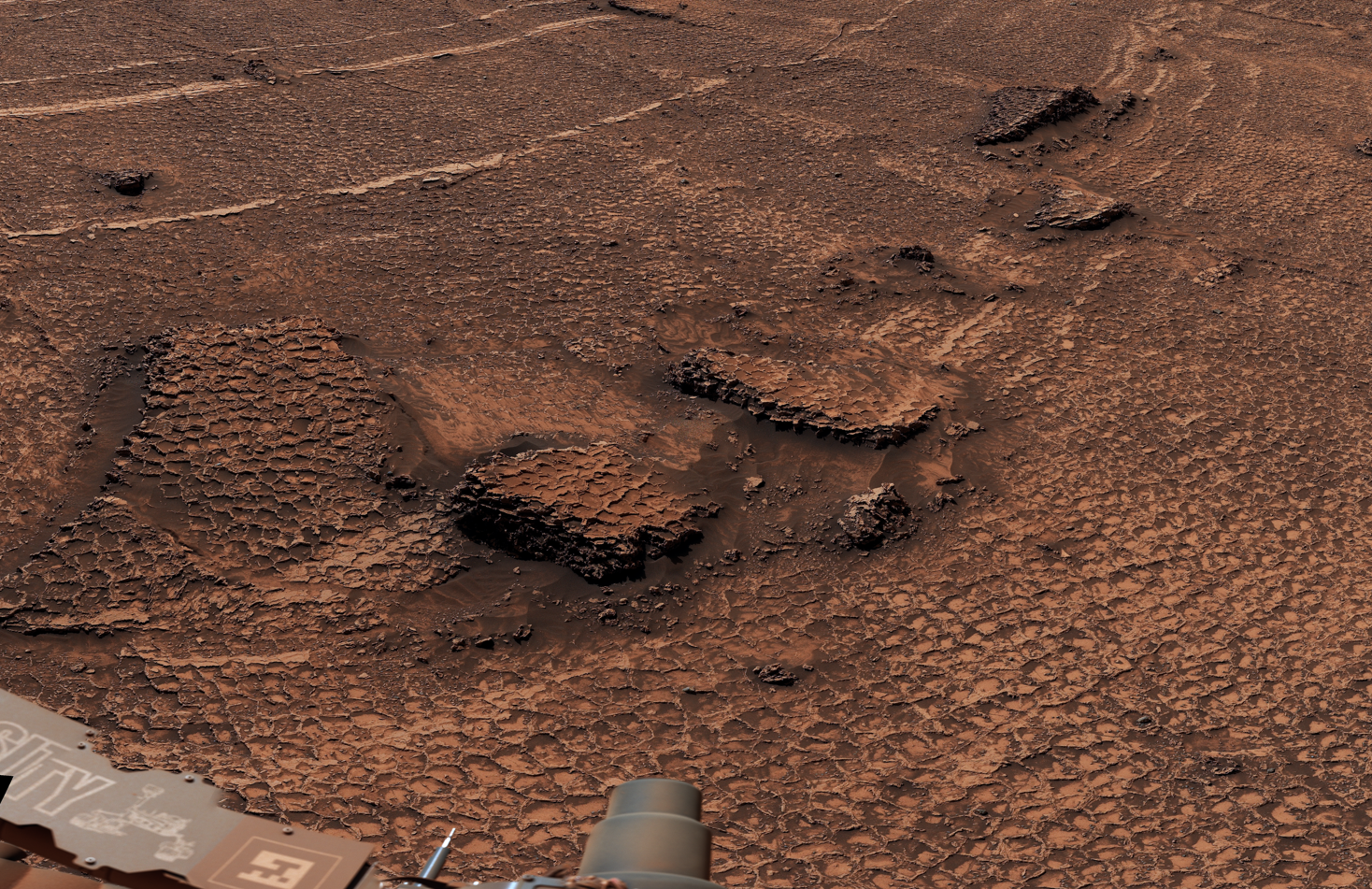
From orbit, the ground ahead of Curiosity looked light-toned and fairly smooth. When the rover drove onto it in June 2026, that broad description dissolved into thousands of small cells. Ridges divid… [+12762 chars]